Création du Laboratoire Méthodes Formelles

Le Laboratoire Méthodes Formelles (LMF) est né le 1er janvier 2021 de la volonté politique de ses tutelles - Université Paris-Saclay, CNRS, ENS Paris-Saclay, Inria et CentraleSupélec - de créer un pôle ciblé sur les méthodes formelles. Le LMF est formé du Laboratoire Spécification et Vérification (LSV, ENS Paris-Saclay, CNRS, Inria) et de l’équipe Vals du Laboratoire de Recherche en Informatique (LRI, Université Paris-Saclay, CNRS, Inria, CentraleSupélec) soit une centaine de personnes.

Son ambition est d’éclairer le « monde numérique » grâce à la logique mathématique en utilisant les méthodes formelles comme outil d’analyse, de modélisation et de raisonnement pour les programmes informatiques, les protocoles de sécurité, etc. Il s'appuie sur des paradigmes de calcul des plus classiques aux plus novateurs comme l’informatique quantique.

Le LMF est structuré en pôles : son cœur de métier en comporte deux, « Preuves » et « Modèles » ; le troisième, « Interactions », est une ouverture à d’autres domaines tels que l’IA et la biologie.
Colloquium in memory of Gilles Dowek

A colloquium in memory of Gilles Dowek (1966–2025) will be held on 19 June 2026 at ENS Paris-Saclay.

The event will bring together colleagues, collaborators, and former students to reflect on his influential contributions to computer science, logic, and philosophy. Gilles Dowek made important advances in type theory and automated reasoning, and was also deeply involved in education. The colloquium will highlight the breadth of his work and its lasting impact. Further information is available on the event webpage: https://deducteam.gitlabpages.inria.fr/colloque-gilles/

Computational Frameworks for Theory Building in Psychology

Speaker: Gaspard Fougea, Phd student, ENS Paris-Saclay

Room 1Z76 (Zoom link)

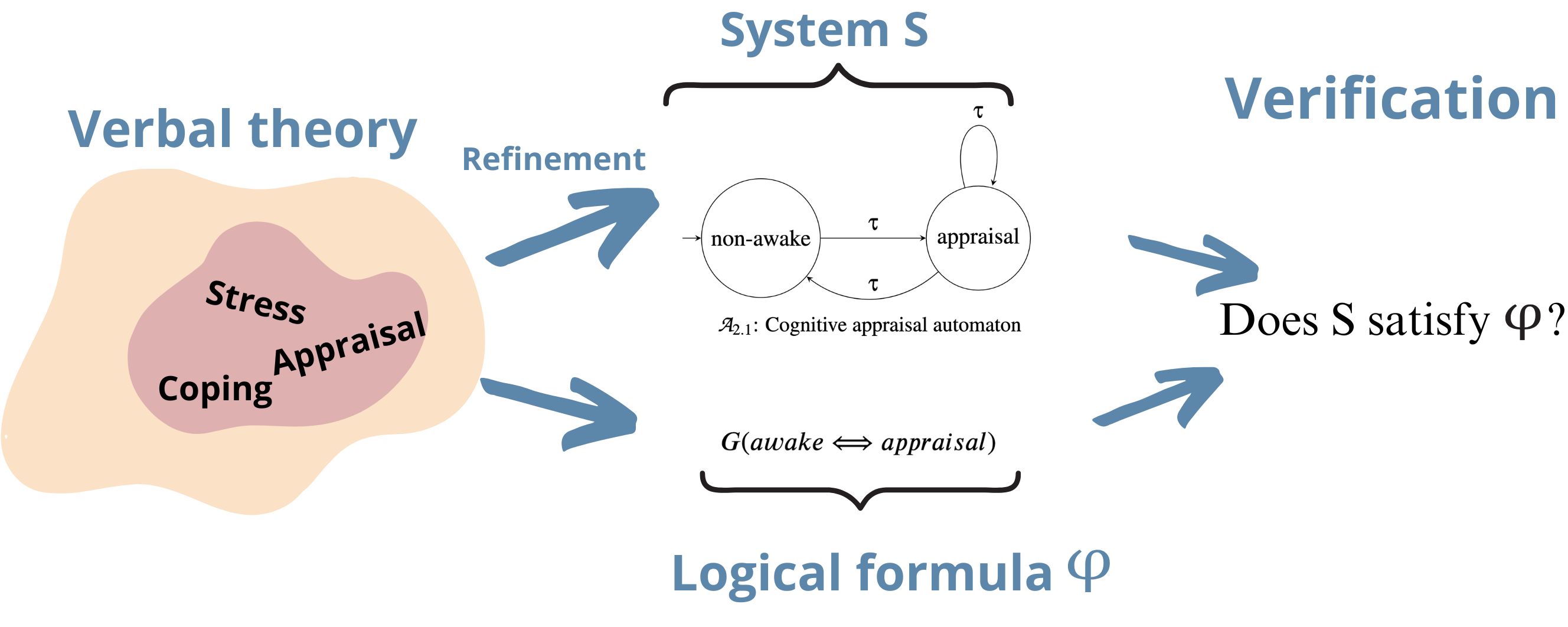
Abstract: Psychological theories are often incompletely specified—that is, certain cases are overlooked, and some statements are ambiguous or imprecise. This is largely due to the fact that such theories are rarely expressed using formal models. Yet in many scientific disciplines, formal modeling plays a crucial role in theory-building: it enhances the precision of predictions, strengthens scientific reasoning, and facilitates collaboration. We propose two automata-based frameworks and a methodology for modeling psychological theories—that is, for transforming informal, verbal descriptions into formal, analyzable models.

Read more...

Annual Meeting of GT DAAL

GT DAAL, the Working Group on Data, Automata, Algebra, and Logic, gathers the French community working on mathematical foundations for the verification of programs and databases.

Topics include database theory, automata theory (words, trees, orders, quantitative and probabilistic models), logic (specification and query formalisms, model theory, model checking, satisfiability, containment, synthesis), games (in logic, verification, model theory, set theory), and algebra and topology. The annual meeting of GT DAAL will be held at ENS Paris-Saclay, in auditorium 1B26, on 2–3 June 2026. For information on the programme and registration, visit https://lmf.cnrs.fr/DAAL2026/.

1st Workshop on Computational Psychology

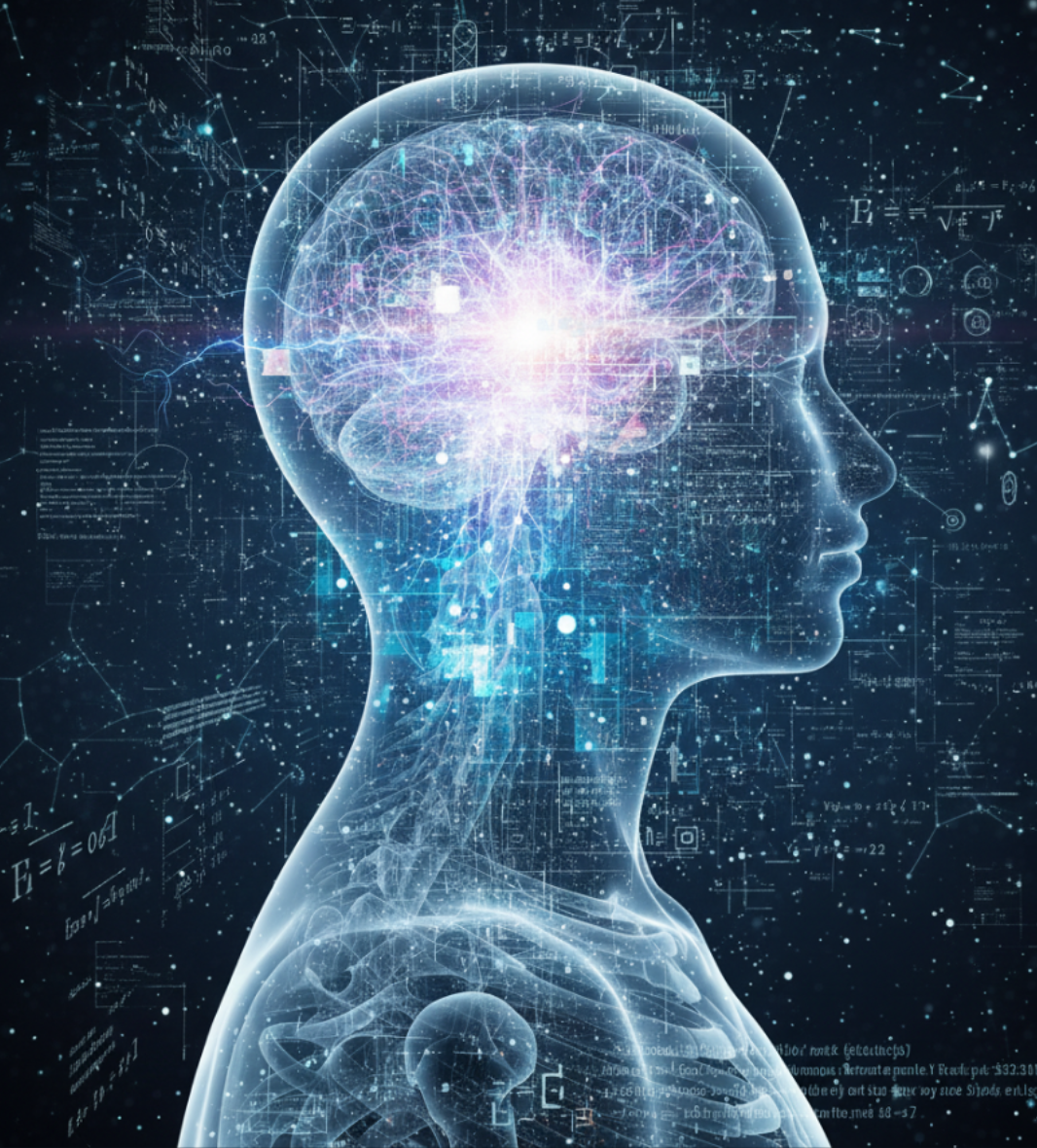
The 1st Workshop on Computational Psychology will take place on June 10th 2026 at ENS Paris-Saclay. Computational Psychology is an interdisciplinary framework that formalizes psychological processes through explicit computational structures.

Situated at the intersection of theoretical psychology, computer science, and data science, it seeks to transform psychological theories into well-defined systems capable of simulation and empirical testing. For information on the programme and registration, visit https://compsych.sciencesconf.org.

Annual Meeting of GT LHC

LHC is a French workgroup about logic, homotopy and categories. It brings together researchers in France who work on connecting theoretical computer science, topology, and

category theory to study the theoretical foundations of programming languages, logic, and their semantics. The seventh edition of the LHC days will take place on Wednesday 17 and Thursday 18 June 2026. For information on the programme and registration, visit https://smimram.gitlabpages.inria.fr/lhc/journees.html.